Showing posts with label category: horror. Show all posts

Thursday, 30 May 2013

Hemlock Grove - Brian McGreevy


The body of a young girl is found mangled and murdered in the woods of Hemlock Grove, Pennsylvania, in the shadow of the abandoned Godfrey Steel mill. A manhunt ensues—though the authorities aren’t sure if it’s a man they should be looking for. 

Some suspect an escapee from the White Tower, a foreboding biotech facility owned by the Godfrey family—their personal fortune and the local economy having moved on from Pittsburgh steel—where, if rumors are true, biological experiments of the most unethical kind take place. Others turn to Peter Rumancek, a Gypsy trailer-trash kid who has told impressionable high school classmates that he’s a werewolf. Or perhaps it’s Roman, the son of the late JR Godfrey, who rules the adolescent social scene with the casual arrogance of a cold-blooded aristocrat, his superior status unquestioned despite his decidedly freakish sister, Shelley, whose monstrous medical conditions belie a sweet intelligence, and his otherworldly control freak of a mother, Olivia.

At once a riveting mystery and a fascinating revelation of the grotesque and the darkness in us all, Hemlock Grove has the architecture and energy to become a classic in its own right—and Brian McGreevy the talent and ambition to enthrall us for years to come.

I really wanted to like Hemlock Grove and in some ways, I did. I love gothic novels and this looked to reinvent them so that they fit better into modern times, something I could really get behind. I wanted to fall in love with Peter and Roman and Shelley (okay, maybe I did fall in love with Shelley) and I wanted this to completely work. It didn't.

Hemlock Grove's problem seems to be that it has too much on its plate. It sets up a ridiculous amount of plotlines that you keep expecting to meet somewhere in the middle and then they never do. So many things are brought up and then completely discarded to the point where you don't know why they even happened in the first place.

There were some things I liked about the novel, though. For one, I really enjoyed the narrative voice. You thought for the longest time that it was third person omniscient and then, out of nowhere, there's an "I" and it throws your whole world for a loop. I was especially thrilled at the end of the first part where the narrator revealed who they were. I thought that was an underscored brilliance.

Hemlock Grove is a great attempt that doesn't realize its full potential. I think Brian McGreevy is very talented and I am looking forward to whatever he writes next. He creates interesting characters and writes some very fascinating scenes; he just needs to figure out how to structure plots better.

Monday, 22 April 2013

We Have Always Lived in the Castle - Shirley Jackson


Taking readers deep into a labyrinth of dark neurosis, We Have Always Lived in the Castle is a deliciously unsettling novel about a perverse, isolated, and possibly murderous family and the struggle that ensues when a cousin arrives at their estate. This edition features a new introduction by Jonathan Lethem.

A long long time ago on this blog, I reviewed another book by Shirley Jackson called The Haunting of Hill House and absolutely loved it. Since then, I've been meaning to read another Shirley Jackson book but never really got around to it. When I saw this book, with its gorgeous new cover illustrations by Thomas Ott, on display at Powell's, I realized I had to read it. Plus, it's short and as I'm moving cross-country this week, I could probably manage it for the blog.

This is one of those books that I feel like I can't say too much about because all the details unravel as you read the novel. It's told in first person by Mary Catherine Blackwood, a younger daughter of a once respected family that is now blacklisted in the village for unknown reasons at the beginning of the novel. Her headspace is ridiculously well thought out and written, you can hear her voice and feel her thoughts as easily as if she were speaking to you. 

The other characters in the novel are just as intricately drawn. Merricat's older sister Constance is a delight, watching her through Merricat's eyes and trying to distinguish the real woman from the figure her sister sees. It takes you ages to figure out what's going on with Uncle Julian. And their cousin is deliciously dastardly, at least in Merricat's mind.

Castle is the kind of book that you have no idea where it's leading when you're reading and that just adds to its mystery. The climax comes suddenly and the denouement is unexpected. It's the kind of book you just keep thinking about in the days following, still puzzling out little details which you never quite caught. 

It's suspenseful and darkly gothic in the best way. It's also very short at under 150 pages so I definitely recommend it for a bit of a darkly light read.

Thursday, 29 November 2012

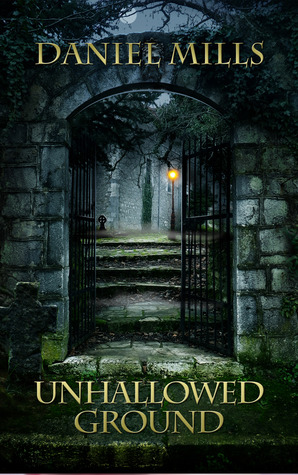
Unhallowed Ground - Daniel Mills


Unhallowed Ground is a novella set in the 1890s in New England, telling the story of young Henry Feathering and his experience at Bittersweet Lodge. He first travels to the lodge when his sister dies and his uncle who resides there becomes his only living relative. On his way, he runs into the St. James siblings, Justice and Clemency who are visiting cousins that live in the same town. Henry falls in love with Clemency and intends to marry her. His uncle, however, seems averse to this idea.

I have to say that the first sixty or so pages of this novella are wonderful. They are written in a delightful style that has a real 1890s feel to it. There is the feeling of creeping darkness about Bittersweet Lodge, the worrying overtones that accompany Henry and Clemency's engagement. This whole sense of wrong that overhangs the whole story creates a great atmosphere that really keeps the reader going.

It's in the last five or so pages that the novella falls apart. Being a novella, Mills knew he only had so many pages to conclude this story he's been weaving. For whatever reason, however, it seems like it came out of nowhere to him. Strings and connections that the reader has been waiting make sit ignored in the corner while the climax becomes a confusing set a paragraphs that are hard to decipher. Even the narrator at the end admits that it feels like a bunch of puzzle pieces that have not come together. Each piece is very intriguing and interesting, they just never come together to create that perfect picture.

I really wanted to like this book and I definitely did for most of it. I'm just disappointed in the slapdash ending that seems a bit like a cop out. The painting, the death, the grave, the aunt, Clemency's behavior. All of it had the potential to be a story of tragedy and loss but instead it becomes a bit of a confused mess. I want more in my ghost stories or at least a ghost I can point to and know why.

Monday, 12 November 2012

Lilith - Toby Tate


I love a good horror story. Unexplainable things, mysterious voices, giant monsters, it's all up my alley. So, when I saw the description of a new book called Lilith, it sounded like just my kind of book. I was excited to read a horror novel and made it the next book for me to pick up.

Lilith tells the story of Hunter Singleton and his wife Lisa who are invited aboard the USS Gerald Ford in a group of media to write an article about the boat. However, strange things are afoot upon the ship. Crew members start doing strange things and as a deadly hurricane makes its way towards Manhattan, things take a turn towards the worst.

I wanted to like this book. I like monster books. I like spooky stuff. I'm not the hugest fan of military books but they can be really good. However, this book was hard to read. So many things rubbed me the wrong way and I could not get over it.

Firstly, the characters. Hunter is the definition of a Gary Stu, a character too perfect to exist in real life. He's charming and kind and has a super hot wife and at one point, a demon(?) kidnaps him to be her sex slave. Yes, that is a thing that happens. Also, he just so happens to have knowledge of everything forever. He was in the Navy, he's smart enough that the CIA lets him in on classified information and my personal favorite, as they are wandering some homeless tunnels, he criticizes the tunnels but understands that at least they're shelter because he was once homeless. … what?

This is the second book featuring Hunter and Lisa which is something I hadn't realized going in so I can forgive some lack of characterization due to not having read the first book. However, there is absolutely no character depth whatsoever. The only motivation I spotted in any of the characters in the entire book was lust. Because there is a lot of strange sex going on in this. Which leads me to another point:

There is a lot of strange sex in this book. Now, I get that sex is a thing that happens in a lot of books and most of the time, it fits in with the plot and the reader moves on. Not so here. There are random sex scenes between characters that will never be mentioned again. There is a disturbing amount of description about female characters and how exotic and hot they are whereas male characters are only described by what race they happen to be (aka I think one of the characters was black.) It felt creepily like reading someone's fantasies than a forward plot development. Although there was a reason for the sex, it still was gratuitous and uncomfortable for the reader.

Something also gratuitous and uncomfortable for the reader was the amount of Navy speak going on in the text. I get that using jargon is helpful for creating atmosphere and believability but between the amount of it and the fact that none of it was explained, it made it incredibly hard to follow what characters were talking about. I still don't know what the CHENG was, although I think it was a person. Or maybe a robot. Or maybe a sex robot? This reader will never know. Or she will because she just googled it. However, I shouldn't have to google "CHENG navy" to find out it meant Chief Engineer. Because an author can just write that. 

I'm going to skip over the fact that the main villain hates the Navy because a sailor ran over her dog when she was a child. That just feels like rubbing salt in the wound at this point.

To be honest, it's a miracle I made it through the whole book. It became more about giggling through its absurdity than actually reading it very early on. I would not recommend this book and I would honestly wonder how this got published in the first place. There is a lot of good horror out there. Don't waste your time with this.

Lilith comes out in January from Dark Fuse.

Monday, 22 October 2012

The Uninvited - Liz Jensen


This is another book I got off Netgalley. The minute I got the email that I had gotten access to it, I ran off to download it. I was very excited about this book and could not wait to get my hands on it.

The Uninvited tells the story of a rash of unexplained child attacks. Normal children, seemingly happy and well adjusted, start attacking family members for no reason. Meanwhile, our hero, Hesketh Lock, is sent on a strange business trip. He works for a company that helps corporations manage scandals. He is sent to Taiwan to investigate a whistleblower who seems to be more ashamed of himself than happy with what he's done.

Hesketh is an interesting main character. A man with Aspergers, he narrates the story with an interesting take as he views the world differently than many a protagonist would. He constantly reflects on a recently broken relationship, thinking back to why it broke up and how much he misses the boy he had become a surrogate father to. At first I thought all of the looking back and the pining was a bit much but it ties into the story about midway in a not unexpected but interesting way. Jensen even went a bit further than I thought she might have and I was impressed.

I honestly could not put this book down and finished it in about two days. There were twists and turns galore. At one point, I was reading the book on the train on my way to a friend's and actually gasped aloud. Definitely an edge of your seat thriller.

I was also impressed with how genuinely creepy Jensen is able to set the mood. Pulling off a "scary" book is one of the hardest things, I believe. When it comes to television and movies, the right atmosphere, lighting and music can set any scene but with literature, it all comes down to the right combination of words. I'm not usually frightened by books but there was a bit, when I put the book down after reading the chapter on the tower in Dubai, where I lay in bed and couldn't help but glance and make sure there wasn't an evil little girl in the room with me.

One thing that is absolutely lovely with this book is that every chapter drives harder and harder towards the end. Each chapter builds upon what it had before and creates a genuine and taut air of tension. I'm honestly surprised I managed to read it in two sittings. The only thing that disappointed me was that I felt the ending didn't quite live up to what came before. Was it a perfectly adequate and understandable ending? Yes. I just felt like there was a bit more coming, a new twist that ultimately was more expected than revelatory. It reminded me of Childhood's End by Arthur C. Clarke. Which is a good thing because that book is amazing. Still, though, it felt expected, in the way it hadn't in that novel.

Overall, I did absolutely adore this. It was right up my alley, scary, thrilling and full of twists and turns. I would recommend it in a heartbeat. You will not be able to put it down. 

Thursday, 6 September 2012

The Historian - Elizabeth Kostova


You know those memories that really aren't that important but they stay with you anyway? I had one of those regarding The Historian. I remember when it came out my freshman year of university because a friend of mine, Stephanie Wang, had gotten it from the store. I read the back and decided it sounded really interesting and was planning on borrowing it when she was done. Sadly, though, she told me it wasn't very good so I never ended up grabbing it off of her. Fast forward to two weeks or so ago and I saw the book in the library. I read the back again and still thought it sounded quite good. And then I realized the only reason I had for not reading it was that a girl I knew six years ago didn't like it. And that seemed silly so I picked it up.

The Historian tells the story of several generations of a family of historians as they track down vampires. Did I mention that vampires are in it? Because if you read the back of the novel, you have no idea. In fact, it takes about a hundred pages before you realize this is a book about vampires. I kind of loved that. I like when a book can be about something like vampires but not play that aspect up.

The primary narrator is an unnamed woman who writes in the introduction that she is writing about her own past. Really, the book takes place in about four different timelines. There is the initial modern day timeline which is only addressed in the introduction and epilogue. There is the mid 70s timeline, which for most of the book is the "modern day" timeline, following the woman as a young girl, learning about her father's past. There is the 1952 timeline, told in letters from the girl's father, explaining how their family got tied up into the whole mess and chronicling his search for his good friend and dissertation supervisor that may have been abducted by Dracula. And finally, there is the 1930 timeline, also told in letters and writings, following Professor Rossi (said dissertation supervisor) as a young man, investigating a bit too deep into the Dracula mythos.

I found this book absolutely thrilling. I don't know if it's the academic in me but the idea of racing through libraries and archives for the next clues and running against language barriers and lost monastery sites to be a refreshing and exciting plot device. There were times when I honestly could not put the book down as every time I decided to 'finish after one more chapter,' said chapter would end on a cliffhanger and I would have to read on. I read 350 pages in one sitting due to this 'problem.'

Another thing that is absolutely enchanting about this novel is the format its written in. By constantly switching narrators and mode of narration, it keeps the reader on the edge of their seat. I'm a big fan of epistolary novels and this book, although not completely one and with letters so long as to feel not very letter-y, uses them perfectly. Just the right amount of information is told in each letter. I particularly like that a lot of the romance is left out of one storyline and it simply reminds you that this is a letter written from a man to his daughter so of course he's going to leave out bits like that. It adds a human touch to what could be a very dry novel.

One more really well executed aspect of the book is the way it explores and plays with history. One of the characters remarks in the book that "for all my historical education, my father had neglected to tell me this: history's terrible moments were real." This is one of the main themes of the book. While our heroine is referring to Vlad Tepes in that moment, what resonated more with me was the descriptions of Paul's (the father's) travels during the Cold War. The Cold War is something that I always vaguely know happened and can tell people about but it never really resonates. However, reading about how, as an American, Paul keeps having to get snuck around, getting sneaky visas and Communist escorts as he tries to visit Communist era Hungary and Bulgaria. It really made me think about how hard travel was back in the day, of the realities of what some people had to go through and how lucky we are that (with the exception of Cuba for us Americans, I suppose) the world has become a much freer place.

This isn't to say that there are no flaws in the book. There are a tremendous amount of characters, in all three major timelines, and it can become hard to keep track of who is who. I only got mixed up once that I can remember, having to flip back to remember why we were worried about the appearance of this guy, and all the characters do have very pronounced personalities. Its just all of the names, really, that can become mixed. The other thing that bugged me, and this is just personal, is that one figure that reoccurs a lot is never given a name and just referred to as 'the evil librarian.' Now, I get it the first time and I understand that they never really learned his name. It just takes away from the dramatic tension a bit when it's announced that standing at the end of the hall is 'the evil librarian.' It's hard to mask the giggle.

Now, when I went to look up the book on Goodreads after I finished, I was disheartened to see quite a few bad reviews. It seems that a lot of people thought the ending was a let down. Now, I didn't think that at all but I think I can see why people took it that way. This is not a book that's about action and, as such, doesn't have many action scenes. Most of it is about the thrill of the chase, finding one clue that leads to the next that leads to the next. There are no big fights and the vampires are more of a lurking menace in the background than an active player in the game. I think a lot of people wanted some sort of big showdown at the end and I can tell you that you don't get that. However, I really don't think a big showdown would have been keeping in tone with the book. When I read it, I thought the end was a fitting ending to this epic narrative. Did I still have a few questions? Well, yes but who doesn't when they finish such an engrossing read? I was perfectly satisfied when I put the book down, though. 

This book is well written and well researched. The plotting is spot on, keeping hold of you from page to page until you can't put the book down anymore. I really enjoyed it but I also know that I have a very academic mindset that also felt very at ease in the novel. If you don't think you could handle four page long segments on Ottoman conquests in the late fifteenth century, you may get a bit bored. If you love history and love mysteries, though, I think this may be the book for you.

Thursday, 17 May 2012

World War Z: An Oral History of the Zombie War - Max Brooks


To be honest, as much as I love horror, I'm always a little cautious when it comes to zombie things. It's not that I'm not interested in zombies (who isn't?), it's mainly something I've mentioned before: I like books to have the potential for a happy ending. Most zombie books/movies/anything? Don't fall into that category. Because even if our heroes survive whatever the climax of the media is, that still means that there are more zombies out there and their big happy ending is just that they survive a little longer in this miserable, zombie-filled world. What a load of joy, huh?

Well, perhaps the reason that I loved this book (besides other things) is that this is a book written in hindsight, after the Zombie War. You know what that means? We beat the zombies! And you know that right from the get go! So, consider this worrywart soothed.

The basis of the book is that a reporter is going around after the war ends and getting firsthand accounts of various people around the globe before, during and post zombie war (the titular World War Z.) It makes for a very interesting read as there is no basic plot line, just short accounts of various people around the world and how each country dealt with the zombie menace. Because of the use of this style, the book reads very quickly and that keeps the reader on their toes.

Of course, a basic narrative comes out, of the countries starting to realize there is a real problem, to people that tried to profit from this, from different generals and their great acts and famous battles of the war, to the ultimate ending of the war. However, by using different voices and characters (almost no one speaks more than once), this seems much more nuanced and interesting than if Brooks had just written a straightforward zombie war book. It really adds to the feel of the book.

Really, that's the genius of the book: that it reads like a war report and not like a zombie novel. It's the kind of thing you would read on the UN website or in the papers, not on the horror shelf of your local bookshop. It actually puts gravitas and depth into something that is usually used for cheap thrills.

A movie version of this is in the works and is likely to come out next year. I'm really not sure how the novel will translate to screen as there is no real linear plot line but apparently Brooks is very behind the script and if the author likes it, it should be rather good. I'll ignore that Brad Pitt is starring. 

So yes, even if you don't think you're a fan of the genre or detest zombie things, this is really a book that's worth checking out. I really think it will surprise you.

Monday, 23 January 2012

Dark Matter: A Ghost Story - Michelle Paver


I picked up Dark Matter pretty much because I had seen ads for it all about town and was intrigued by its subtitle: A Ghost Story. As has been well documented in this blog, I am always up for a good ghost story and treated myself to the book for my birthday a few months past. 

It took me a bit to get to it, mainly because essays interrupted my life for a while there but I ended up reading it on the plane home for the holidays. I had a vested interest in liking this book, as well; one of my good friends works at Hatchards and had recommended this book to a customer on the basis that '[her] friend just read it and really enjoyed it!' I, of course, was said friend who had yet to pick the book up off the shelf. Thus, I really hoped I liked it so that she hadn't just made me out as a liar to that little old lady.

To my delight, Dark Matter was nothing that I had expected, not that I had much of an idea of what to expect. Set in the 1930s, it follows an expedition to the Arctic, full of optimistic and rich young men set on adventure. Our hero, however, is a lonely boy recruited for his skill in physics and technology, an intellectual that has a rather large chip on his shoulder due to his low social and economic status. He can't stand most of the other men, with the exception of golden boy Gary, who he feels a great admiration for. 

There are many things up in the Arctic that are new to the men and it doesn't help that the captain of the ship taking them up seems unwilling to share some dark tales that he has been hinting at the whole voyage. There's an overwhelming sense that something is going on up there but most everyone is too level-minded to think much of it.

It's not until things start going wrong and one by one, members of the team have to be taken back to civilization that things start to show their true colors. Because our hero, Jack, is now left alone in a small hut in the middle of nowhere. But then again, he just might not be as alone as he thinks.

I fell in love with this book while I was reading it and could not put it down. The publishers made a strange choice on format: huge print and pictures randomly placed throughout the book. It took some getting used to but the pictures really helped set the scene and even the big typeface was easily acquiesced to. 

What I really enjoyed was the writing style. It was easy to pick up and kept a consistant eerie tone throughout the novel. It's told in diary-form, something I'm always a big fan of, and that helps the novel create mood and form character, watching Jack struggle with the things he sees and hears, while trying to convince himself that he's not going mad. 

The ending, which I will not spoil but must comment on, was honestly my favorite part. Although the actual events were not a complete surprise, the way they handled the character development of Jack in those last few pages was very engaging and Paver made a few choices with him I was not expecting but loved. She took an issue that normal writers from the thirties tend to pussyfoot around and decided to state it in a no-nonsense manner that was very fitting. It was very well done.

All in all, I really enjoyed this book and, immediately upon return home, lent it to my father to read. I'm not sure if he has or not (things tend to sit around the family home for months before attention is paid to them) but the fact that I lent something out so soon after reading it is testament to how much I loved it. If you have any interest in the Arctic and polar expeditions, camaraderie and class division in England in the thirties, or just ghosts (like me!), I would recommend it. It's a quick read and very much worth an afternoon.

Monday, 28 February 2011

[027] The Girl Who Loved Tom Gordon - Stephen King


The Girl Who Loved Tom Gordon by Stephen King

What the Back of the Book Has to Say:

On a six-mile hike on the Maine-New Hampshire branch of the Appalachian Trail, nine-year-old Trisha McFarland quickly tires of the constant bickering between her older brother, Pete, and her recently divorced mother. But when she wanders off by herself, and then tries to catch up by attempting a shortcut, she becomes lost in a wilderness maze full of peril and terror. 

As night falls, Trisha has only her ingenuity as a defense against the elements, and only her courage and faith to withstand her mounting fears. For solace she tunes her Walkman to broadcasts of Boston Red Sox baseball games and follows the gritty performances of her hero, relief pitcher Tom Gordon. And when her radio's reception begins to fade, Trisha imagines that Tom Gordon is with her-- protecting her from an all-too-real enemy who has left a trail of slaughtered animals and mangled trees in the dense, dark woods...

Why I Picked It Up:

This novel has been sitting on my bookshelf at home since I was eleven. It was time to actually read it.

What I Think:

I was raised to love horror. My father needed someone to take to scary movies and watch late night sci fi and horror television with as it was made quite clear in the beginning of their marriage that my mother was not going to be that person. After taking her to see Predator when she was pregnant with me, my mother officially swore off horror movies and left the task of amusing her husband to her unborn child. As soon as I was able to, I heartily enjoyed my calling.

As such, I've been well acquainted with Stephen King for a long time. Although I can't for the life of me remember the first Stephen King I encountered, my greatest memory of him is reading It over summer break before high school. I had always liked the television movie and found, to my delight, that the novel was even better. King's style played up everything and while I usually find it hard to get spooked by a book, I remember having to put the book down a few evenings because I was starting to stare over my shoulder a few more times than was warranted. To this day, that book remains in my top five. 

The Girl Who Loved Tom Gordon was actually given to me by my beloved Aunt Shannon when I was around eleven years old. She had read it, enjoyed it and said that the main girl reminded her of me so she gave me my own copy. I was a pretty precocious reader back in those days so it really wasn't all that strange to give me a copy of a Stephen King book. I was really grateful, stuck the book on the bookshelf and there it stands to this day. I would glance over at it every once in awhile, think "I should read that" and then go about my daily life. So when I found the book at Ogikubo, just sitting on the shelf, I knew I had to pick it up.

This novel is intense but it's very good. Very quickly into the book, Trisha goes off the path while hiking with her brother and mother to use the bathroom, mostly because she's annoyed they're not listening to her. She tries to return via shortcut and soon discovers that she can't really find her way back to the path. The next two hundred pages chronicle her wanderings in the wilderness with just the clothes on her back, a packed lunch, a poncho and her Walkman. 

There's something really interesting about a book centered on a solitary figure like that. Every once in a blue moon, King will give a throwaway reference to what's going on in the search for Trisha but 99% of the book is just Trisha and her thoughts. She makes good decisions and bad ones but almost everything is done on a whim or based on information she thinks she remembers hearing once. Days pass and you watch her slowly run out of food and water, withering down to a stalk of a girl, endlessly trying to find traces of civilization. 

As the novel progresses, however, a strange presence starts to follow Trisha. Obviously it wouldn't be Stephen King without a spooky element. The greatness of this "God of the Lost" that is stalking Trisha is that it's not introduced until a few days into her journey, at which point she has already hallucinated sounds and images. This could be a horror novel or just a survival novel with a slow descent into insanity. The ambiguity is delicious. 

One drawback for me is that I don't know baseball as well as I should. Although I am a Mariner's fan, I admit that it has been pretty recent and I don't know much about the sport. The book is framed in the style of a baseball game, the chapter titles different innings. If I knew more about baseball, I'm sure this would give me a lot more insight but, unfortunately, it was one of those "I know this is awesome but I'm missing it" moments. 

The whole book really does have a baseball theme. Trisha loves the Red Sox and tries to keep her sanity by listening to games and thinking about her favorite player, Tom Gordon. Gordon eventually becomes a constant hallucination by her side and ends up giving her advice when she is at her last challenge. It's an interesting motif  and spin on the "lost in the woods" story that has been told so often.

As this is Stephen King, I wasn't entirely sure how the book was going to end. Was she going to be rescued? Was she going to die in the woods? It could honestly have gone either way. And the ending did not disappoint. I won't spoil it, obviously, but there is definitely a worthy conclusion to the feverish tale.

I would highly recommend this book. It's a pretty quick read, between page length and page-turner statuses, and for those who don't really enjoy horror, it's honestly not all that scary. If you've ever slightly jumped while camping or looked up quickly when you heard a twig snap, then this is for you.

Sunday, 21 November 2010

[005] The Haunting of Hill House - Shirley Jackson


The Haunting of Hill House/The Haunting by Shirley Jackson

What the Back of the Book Has to Say:

Four seekers have come to the ugly, abandoned old mansion: Dr. Montague, an occult scholar looking for solid evidence of the psychic phenomenon called haunting; Theodora, his lovely and light-hearted assistant; Eleanor, a lonely, homeless girl well acquainted with poltergeists, and Luke, the adventurous future heir of Hill House. At first, their stay seems destined to be merely a spooky encounter with inexplicable noises and self-closing doors, but Hill House is gathering its powers and will soon choose one of them to make its own...

Why I Picked it Up: 

A love of ghost stories and positive memories of liking the 1999 movie.

What I Think:

I have a deep and abiding love of horror stories, instilled in me by my father at a very early age. I remember watching Predator around the same age I was watching those good old Disney musicals and Gremlins has been in my top five movies since I was six. And when it comes to horror, I've always preferred ghost stories. I think the best part of horror stories aren't the overtly gory things but the little things that put a chill down your spine: a footstep when you're alone in the house, things in a different place from where you left them, a voice you don't recognize calling your name. 

The novel The Haunting of Hill House is much different from the recent movie that was based off of it. I hear that the 1963 movie version is closer to the novel but I have not had the pleasure of watching it yet so I cannot compare. The 1999 movie, starring Liam Neeson, Owen Wilson, Lili Taylor and Catherine Zeta-Jones, is a classic ghost film, all about a vengeful spirit slowly trying to kill off a group of researchers in a big, scary haunted house. There's living furniture, voices in the night and murderous spirits. There's even a colossal climax at the end where the house chooses to try and take one of the main characters to itself. It's a good ghost story and delightfully creepy.

The novel is divergent from this movie but no less enjoyable, if for different reasons. The characters are still all there and the basis of the plot is the same: a professor wants to study the idea of 'hauntings' and invites a group of people to the house to be test subjects. That is about as far as they are similar, however. The book is not so much a ghost story as a true gothic novel, all dark corners and suspicion and shadows. There is the feeling of claustrophobia, the entire world consisting of the four researchers in a big, drafty house that seems to change its architecture at whim. There's a delectable backstory of past cruelty and unhappiness infecting the house. There's a group of strangers thrown together who bond quickly and deeply, calling each other 'dear,' playfully creating fake identities for each other and acting as if they were closer than family mere hours after meeting, a strange tone that only seems to work in the very best gothic novels ala Murdoch's The Unicorn

Most of the story is told through the eyes of Eleanor, a girl who came to the house because she had nowhere else to go. She lives with a sister and brother-in-law who view her only as a burden and escapes into the new life that is offered her at Hill House. Here she is a valued member of the team; here she is sharp and witty and important. She delights in looking clever in front of Luke and forms a vaguely homoerotic relationship with Theodora (but what gothic novel doesn't have some vaguely homoerotic relationships?) As time goes on, however, she begins to feel more and more left out, as if she weren't as important as she seemed at first, as if perhaps the others don't care for her, as if perhaps the house is getting to her, getting inside of her.

The real delight of this novel is that it is a ghost story without a ghost. Sure, many spooky things happen to the characters as the story goes on: doors bang open and closed, there seem to be strange whispers in the hallways, there's always a feeling of being watched, being chased. However, nothing explicit ever happens. Everything is so deliciously vague. Since everything takes place through Eleanor's eyes, it's just as easy to interpret the strange actions not as fact but as a very gradual descent into madness. Even the language of the novel supports this theory, getting more and more stream of consciousness and fluid and yet disjointed and confused as the journey through the house's secrets continues. 

It all culminates in a grand climax, just as exciting as the movie but much more dependent on the reader to determine exactly what has happened. Depending on whether you believe the house is evil or Eleanor is just crazy, the ending is either sinister or tragic. Either way, however, you're equally pleased with the conclusion. There's just something perfect in the denouement or, I suppose, the lack thereof. 

All in all, I loved this book and highly recommend it. I suppose it's a little late to read it for Halloween but if you want a little bit of a spooky Thanksgiving, pick it up. It's a quick read and well worth it.